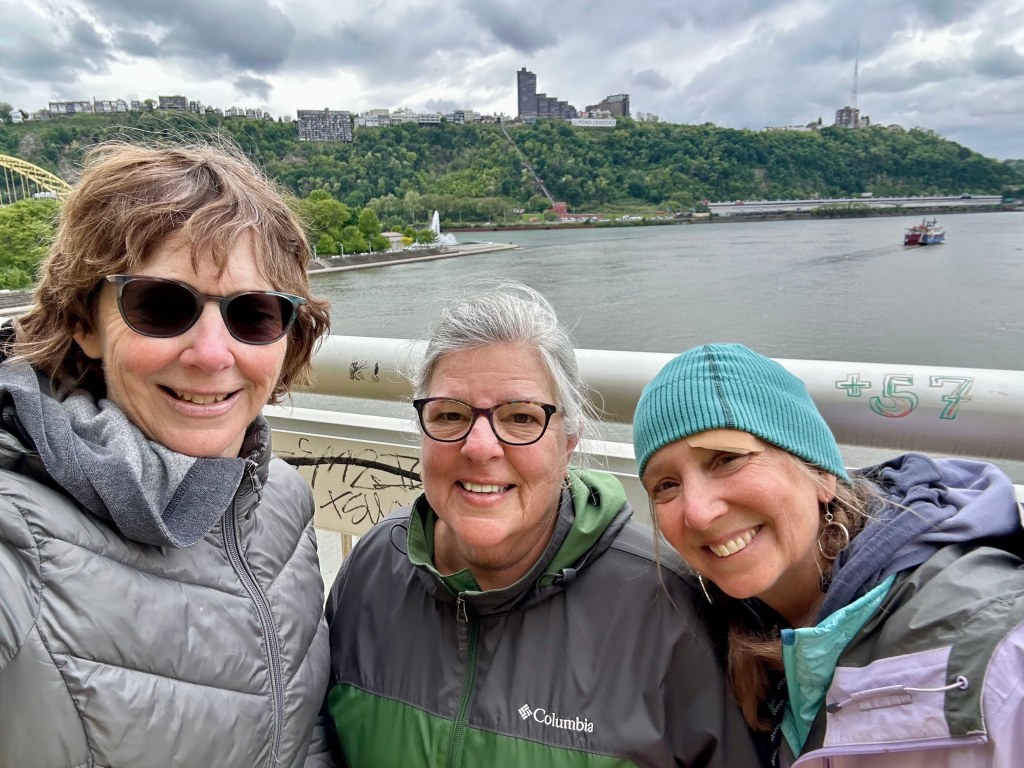
Whether it's one simple yet somehow perfect day or a dreamed about journey finally realized, I never want to forget the joy of the moment or how fortunate I am!
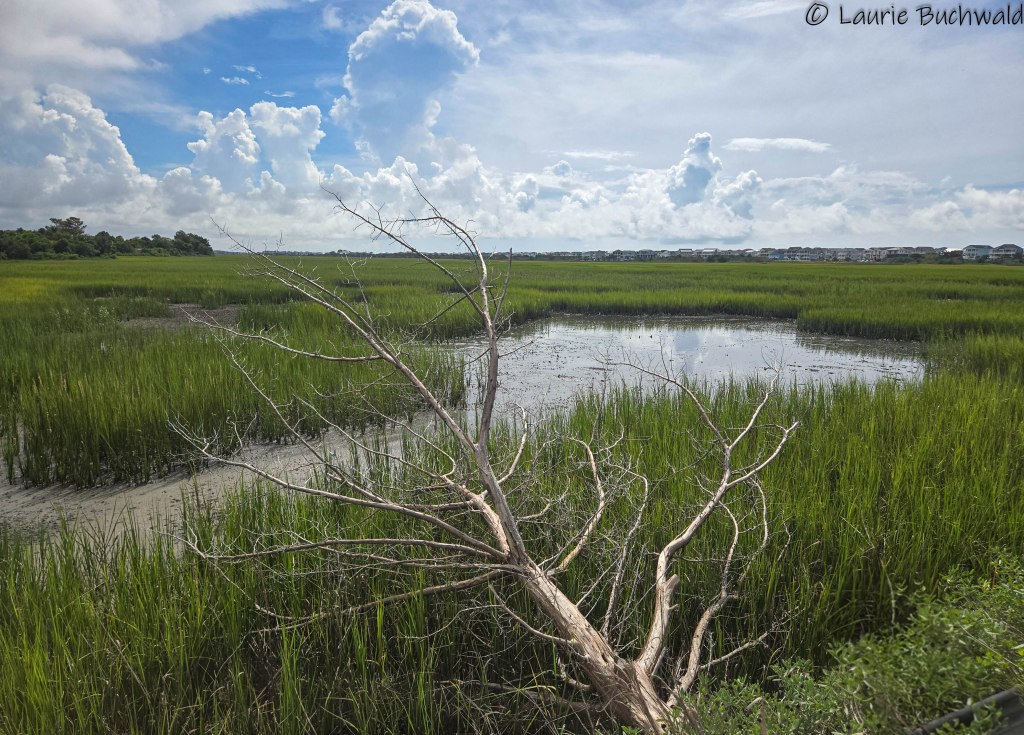
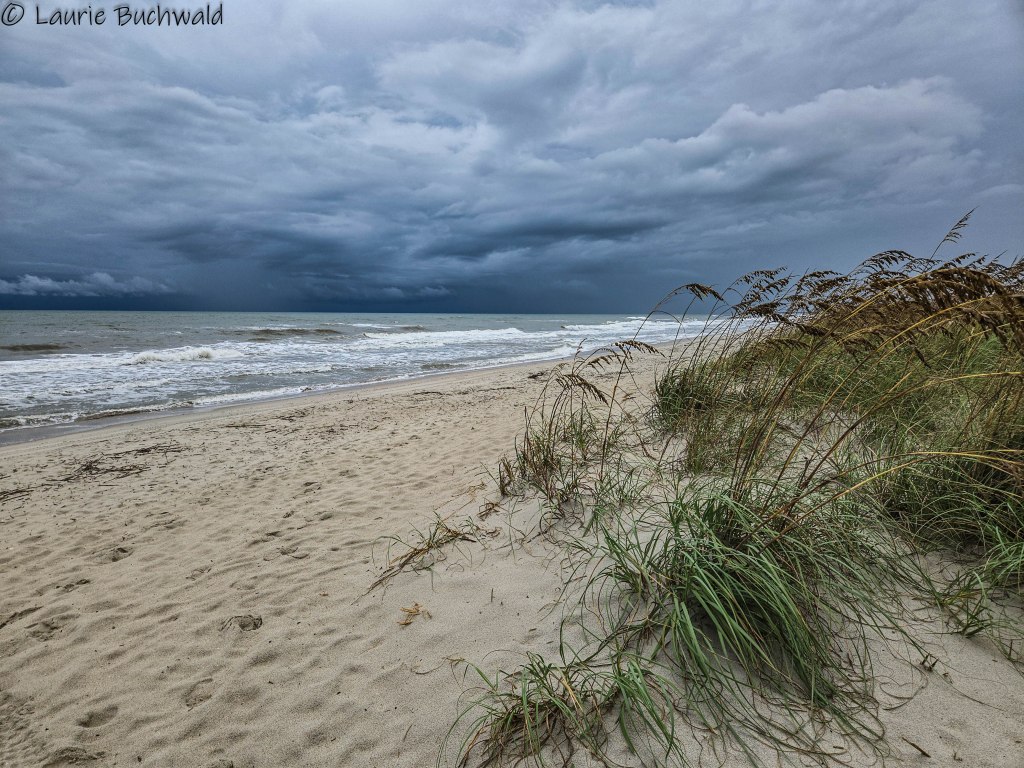
The Intracoastal Waterway (ICW) is a 3000-mile inland water network along the Atlantic and Gulf Coasts of the United States. This image was captured in Ocean Isle, North Carolina.
Try as I might, I cannot seem to get back on to a regular posting schedule. Even still, I hope you enjoy this sand art, created by the tide off Ocean Isle Beach.
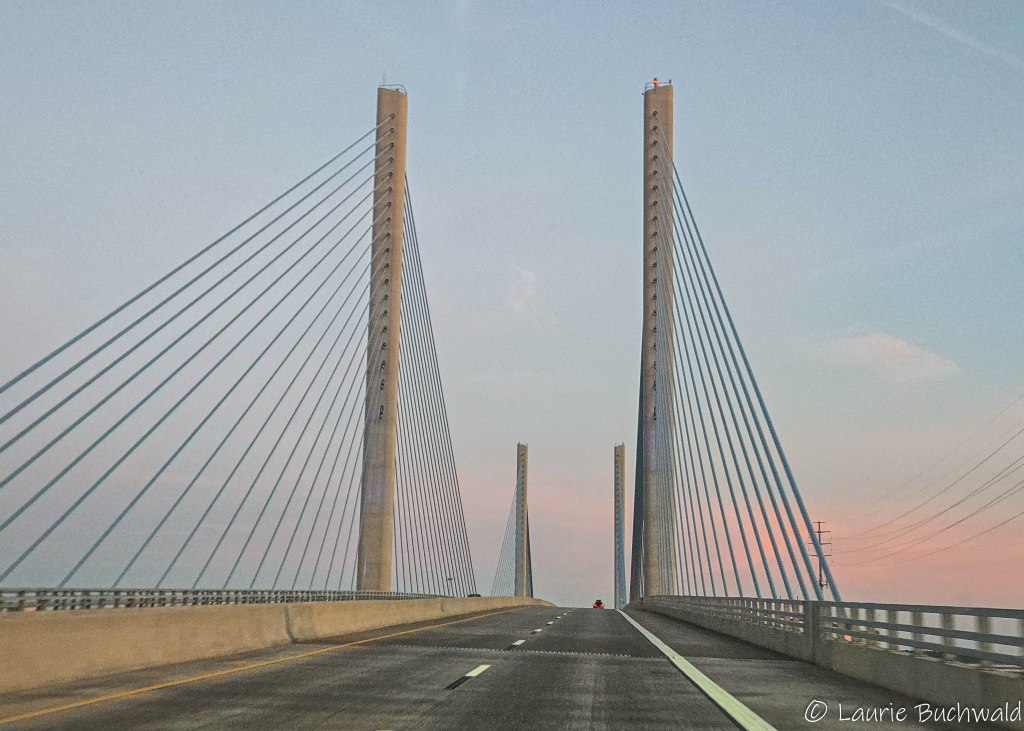
Yes, the focus is the bridge, but there’s something about those headlights, disappearing in the distance, that grab my eye. I took this image with my cellphone, through the windshield, from a moving car.
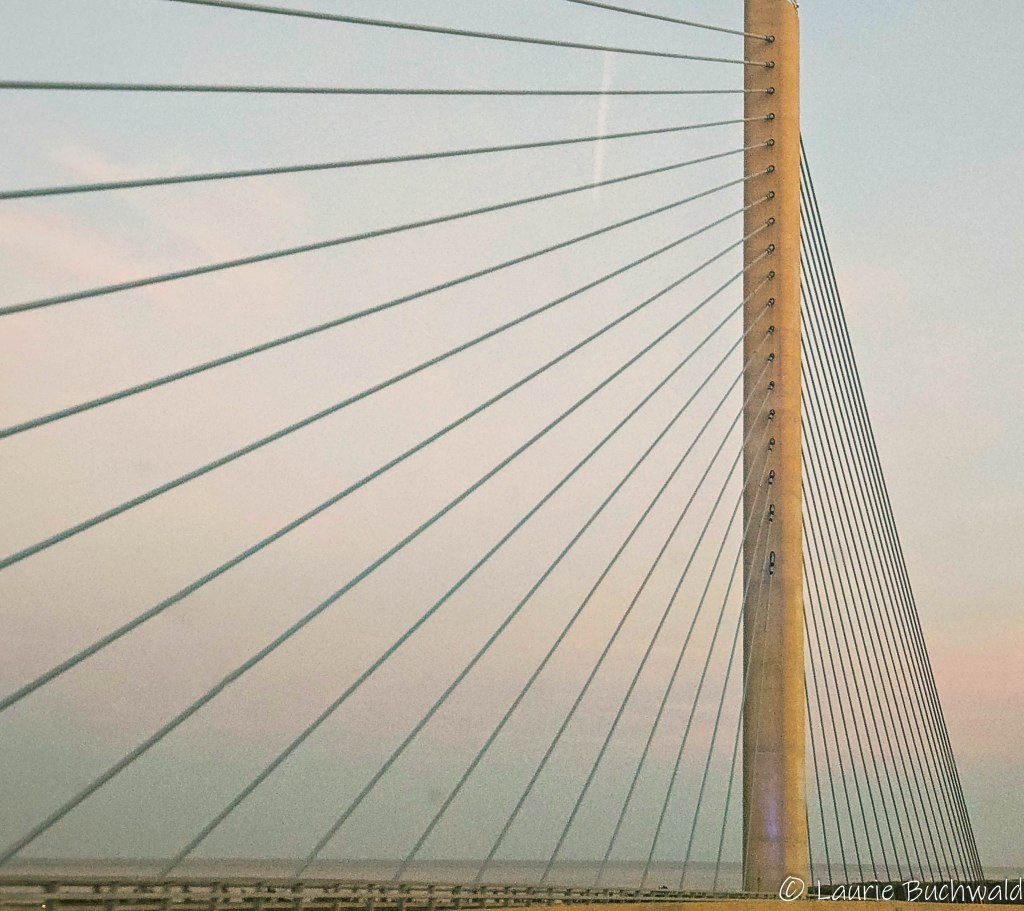
The Charles C Cullen Bridge is the 5th bridge to connect the northern and southern halves of the Delaware Seashore State Park. Built in 2012, it is a 2600ft long, cable-stayed bridge with a 45-foot vertical clearance. It has a 12 foot wide pedestrian / cyclist sidewalk that offers panoramic viers of the Atlantic Ocean, the Indian River Bay and the surrounding coastline. To learn more about the 88 yr history history of the bridge(s), including storm damage, instability, and a bridge collapse which killed 3 people, visit this link.
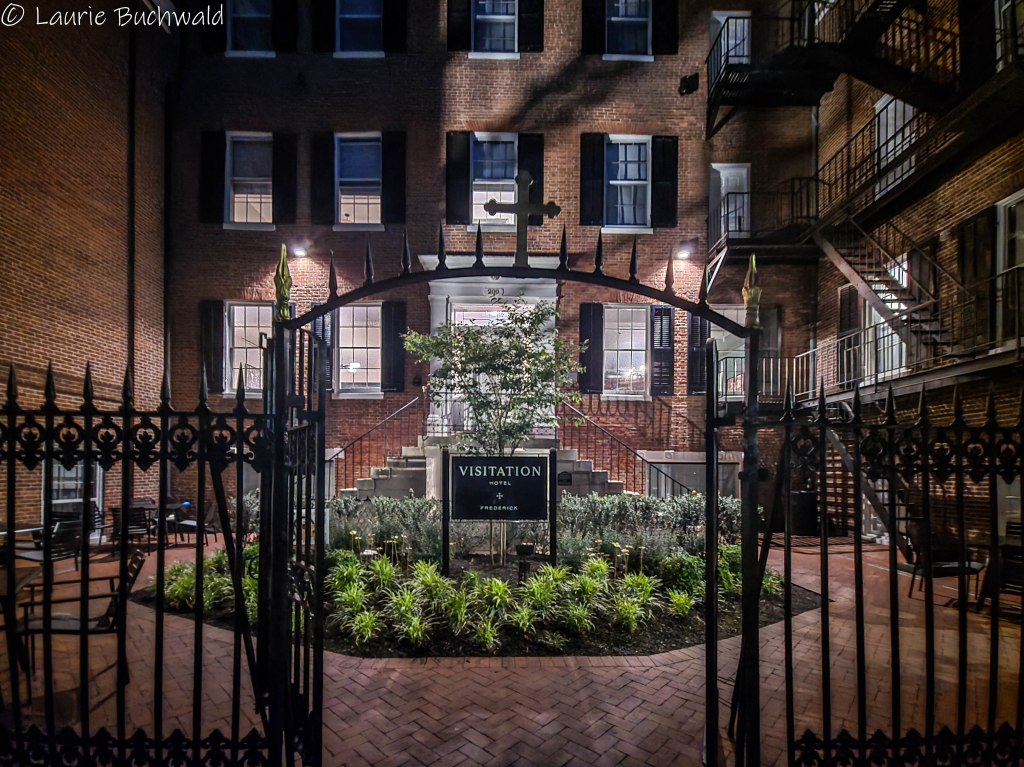
Greg and I had the great good fortune to spend a night at the Visitation Hotel in Frederick Maryland. The hotel has an interesting history as a cloistered monastery and internationally renowned academic institution. Originally built in 1824, the structure survived fires in 1845 and in 2023, and finally opened as a boutique hotel in December 2024.
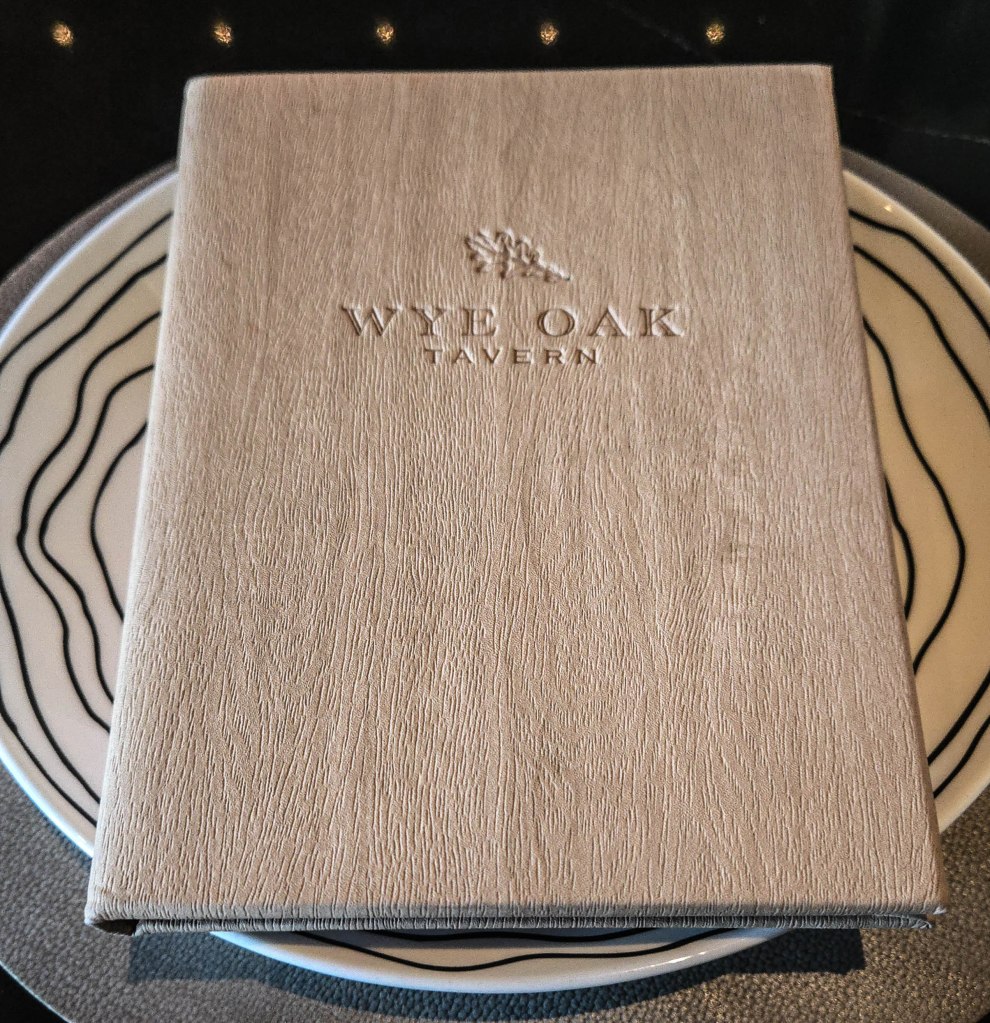
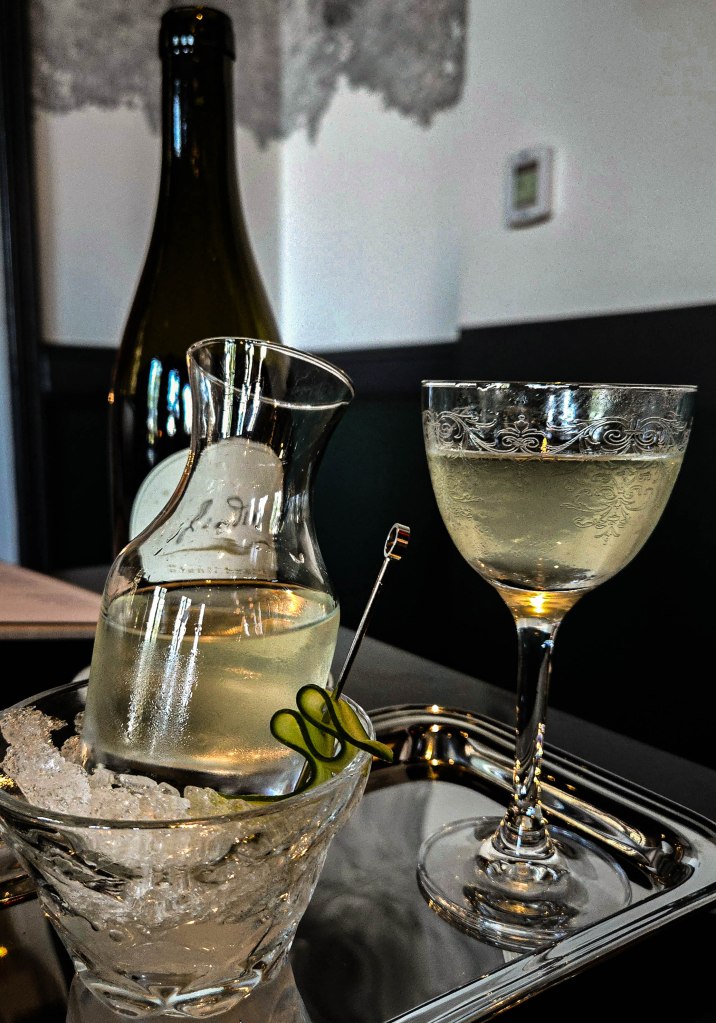
We also enjoyed an amazing dinner in the hotel’s restaurant, the Wye Oak Tavern, started by James Beard-nominated and “Top Chef” stars, Bryan and Michael Voltaggio. Truly, an incredible evening. So incredible, in fact, that I did not take many photos. The food was divine!
The restaurant is located in the former Visitation Chapel, and in order for the restaurant to move forward, the Chapel had to be deconsecrated. Fascinating! You can read about that process here.
This is my fourth and final blog post about our bike trip on the Great Allegheny Passsage, a 150 mile Rail Trail that runs between Cumberland, MD to Pittsburgh, PA. The first two posts, here and here, are from the first 75 miles, ridden in the Fall of 2025. The third post is about the Art and History of the GAP. If you are just learning about the trail, check out the GAP Trail website and learn about how you, too, can enjoy a great adventure – whether by foot or by bicycle.
On our third day, we rode 45 miles from Ohiopyle, PA to Smithton, a small rural town in Pennsylvania, population 400. On this, our final day on the GAP, we only had a 30 mile ride to get to Pittsburgh, population 2.2 million (in the Pittsburgh Metropolitan Statistical Area).
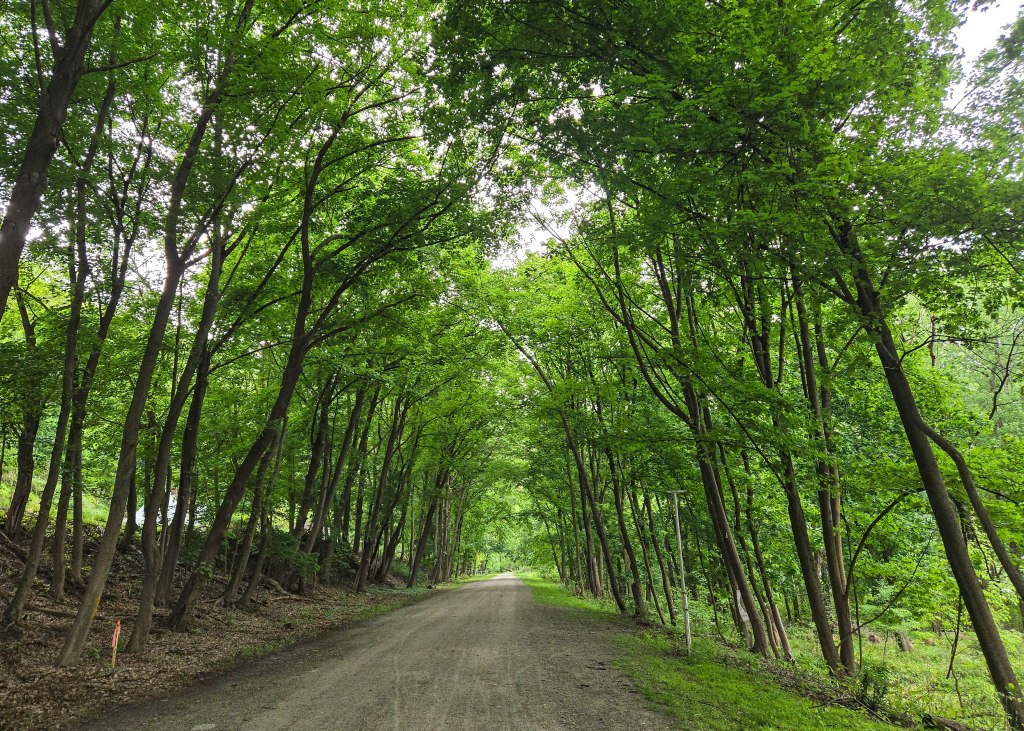
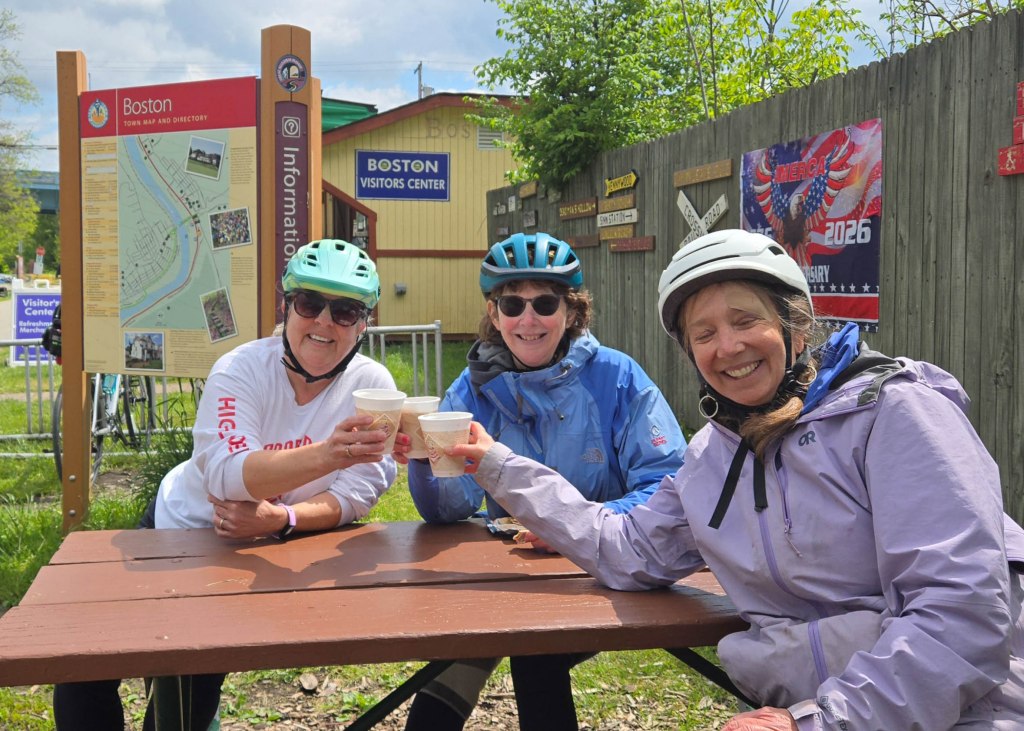
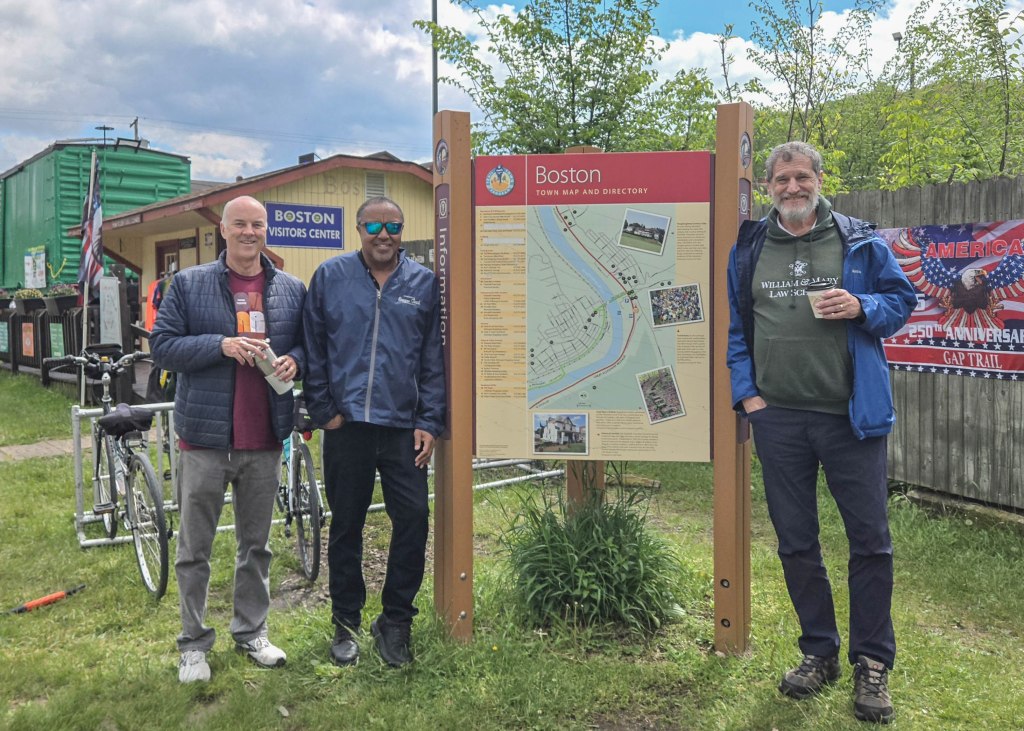
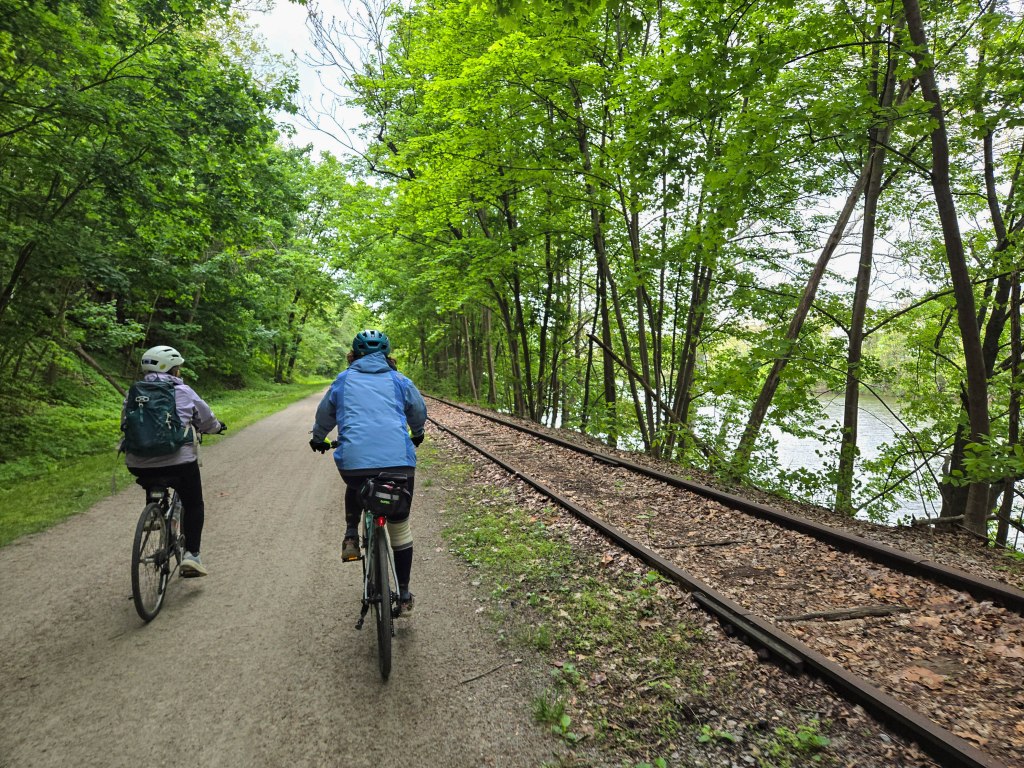
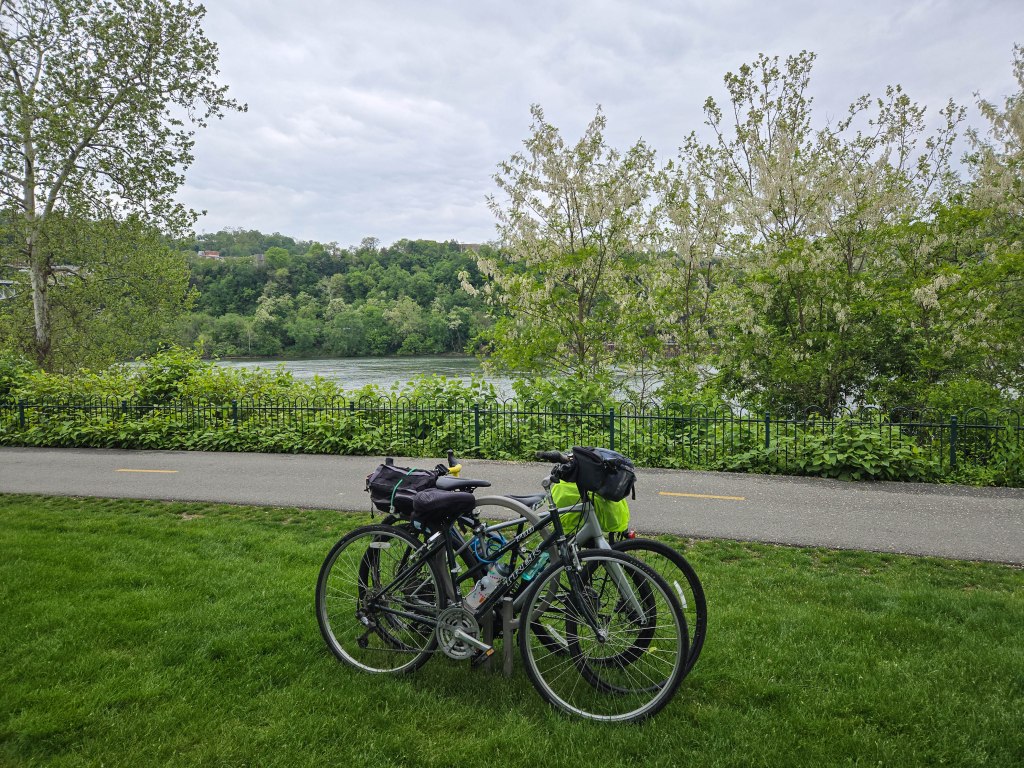
The first 15 miles found us following a tree lined rail trail (we called it a “cathedral of trees” – see first photo), riding through small rural communities. We met our support crew for coffee and hot chocolate at a tiny little visitors center in Boston, PA.
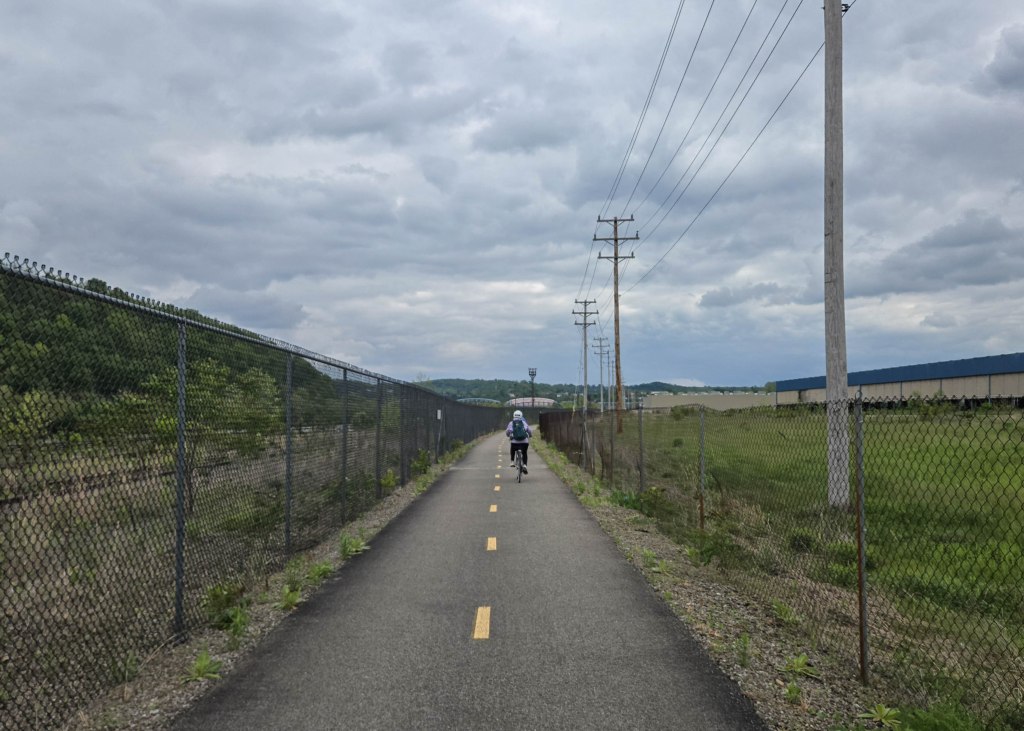
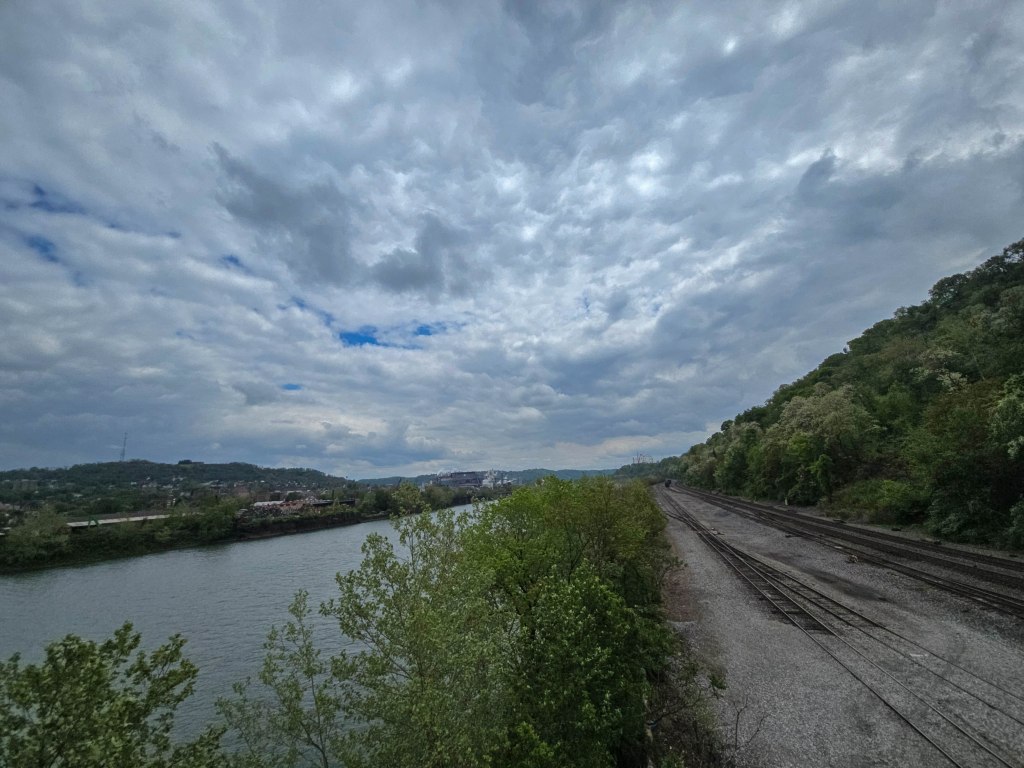
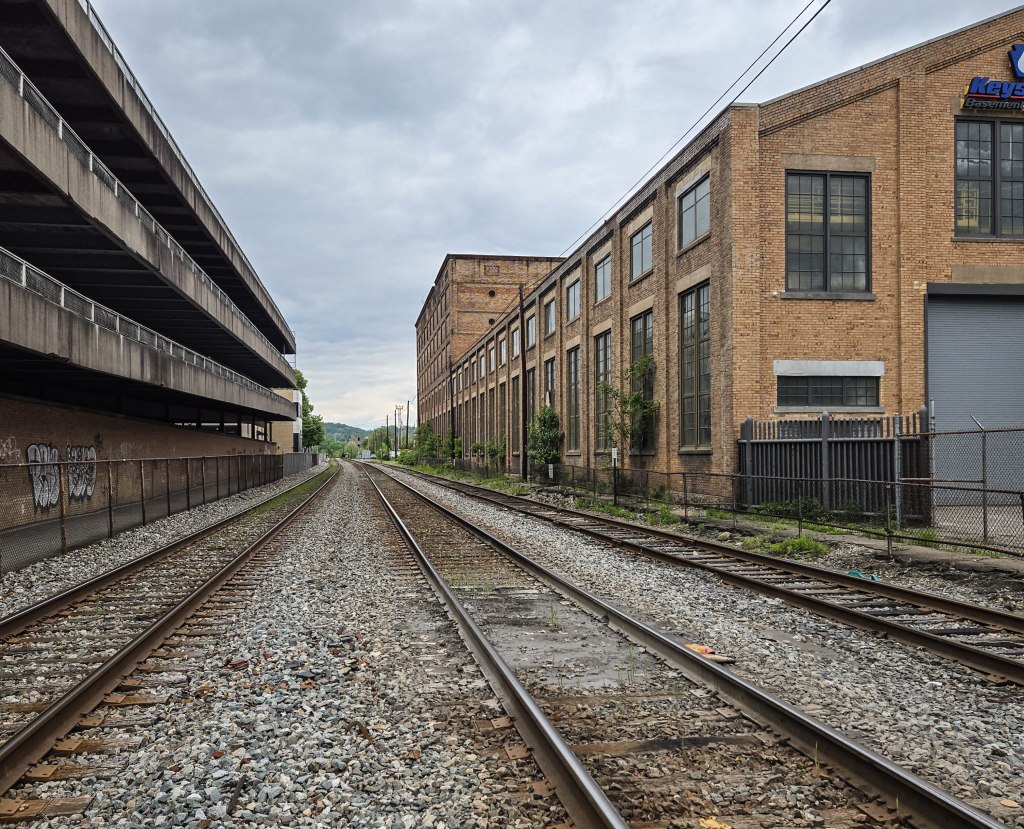
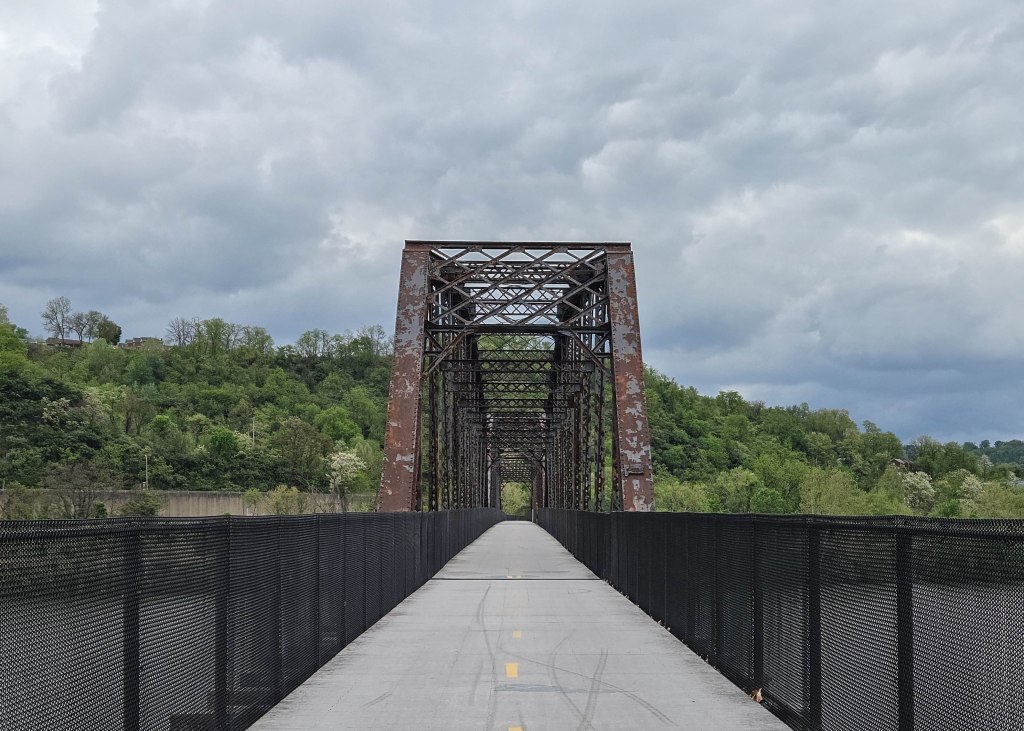
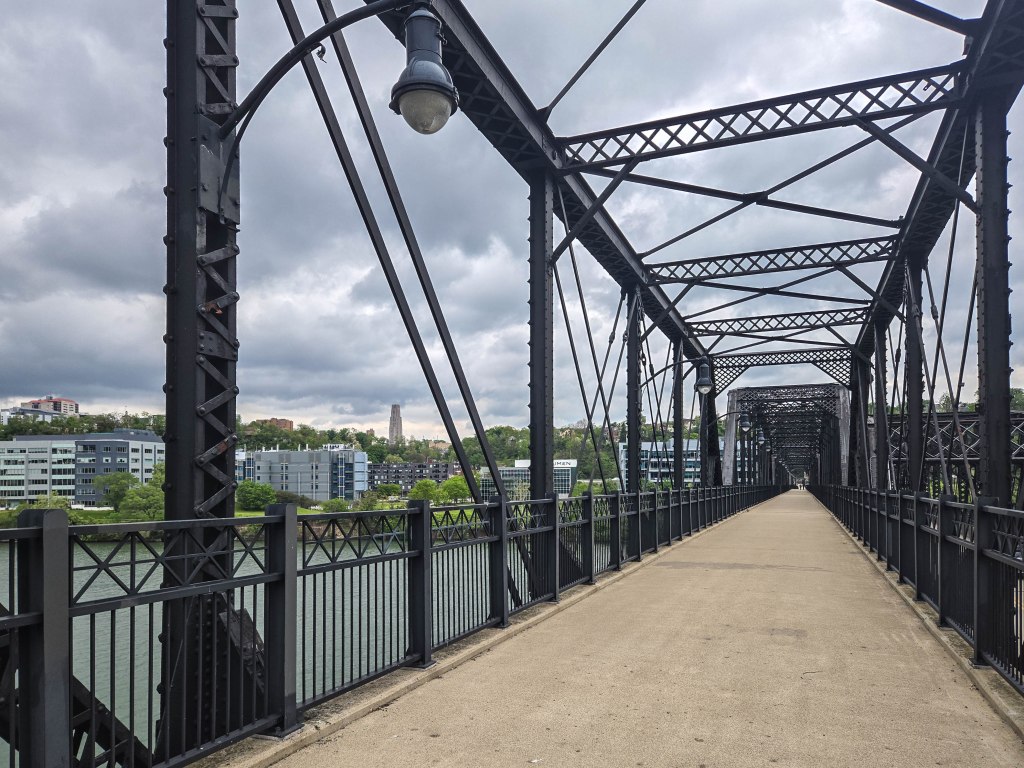
Soon enough though, we began to see signs of larger, urban communities, and we enjoyed the changing scenery. The cloudy day made for a great contrast against the railroad tracks and steel trestles.
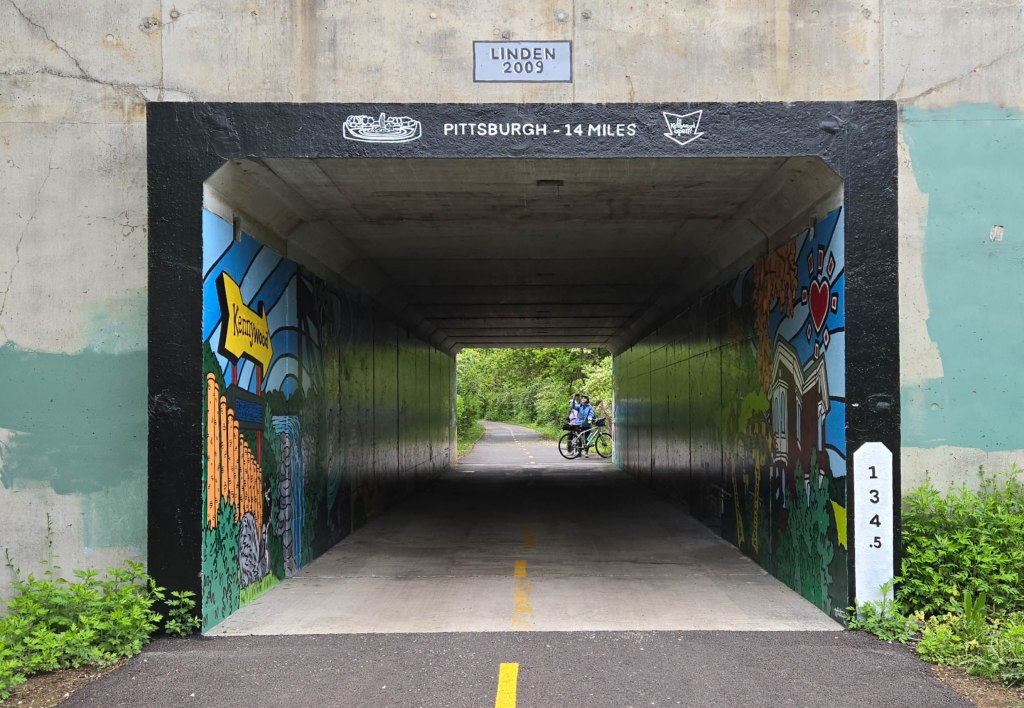
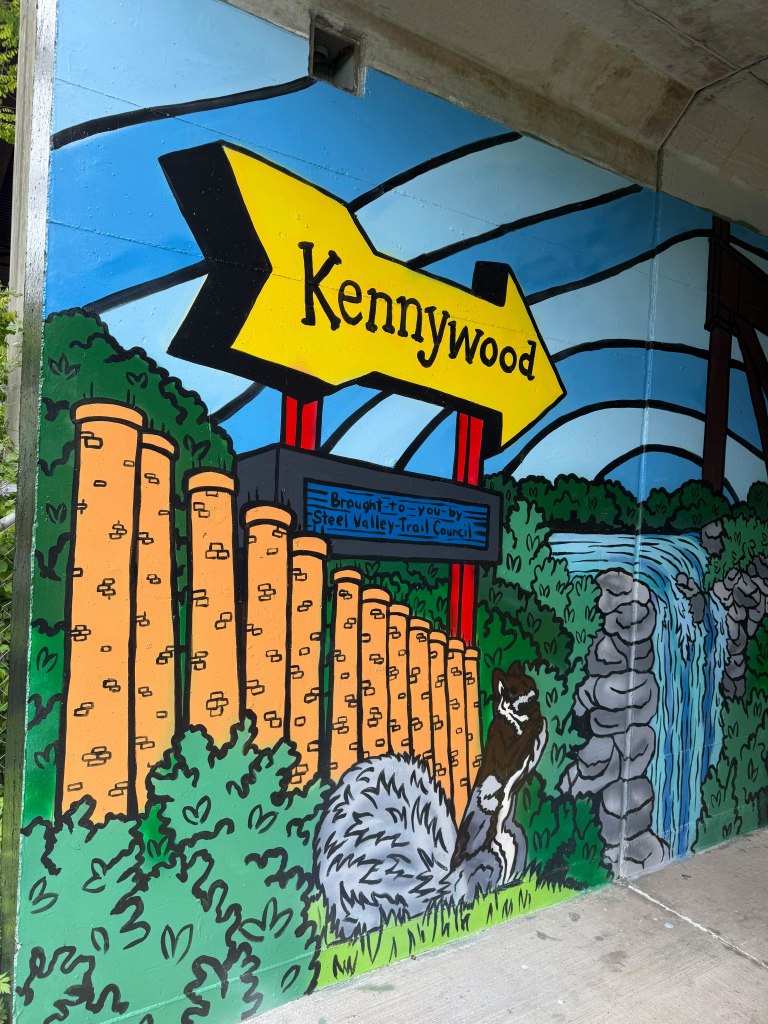
The Linden Tunnel is a 63-foot-long, 8-foot-high concrete structure located in Duquesne, Pennsylvania. The tunnel walls were adorned with gorgeous, colorful murals (mural photo by Ruth).
After a quick stop for lunch in Homestead, located along the Monongahela River, we got back on the bikes and rode onward to Pittsburgh.
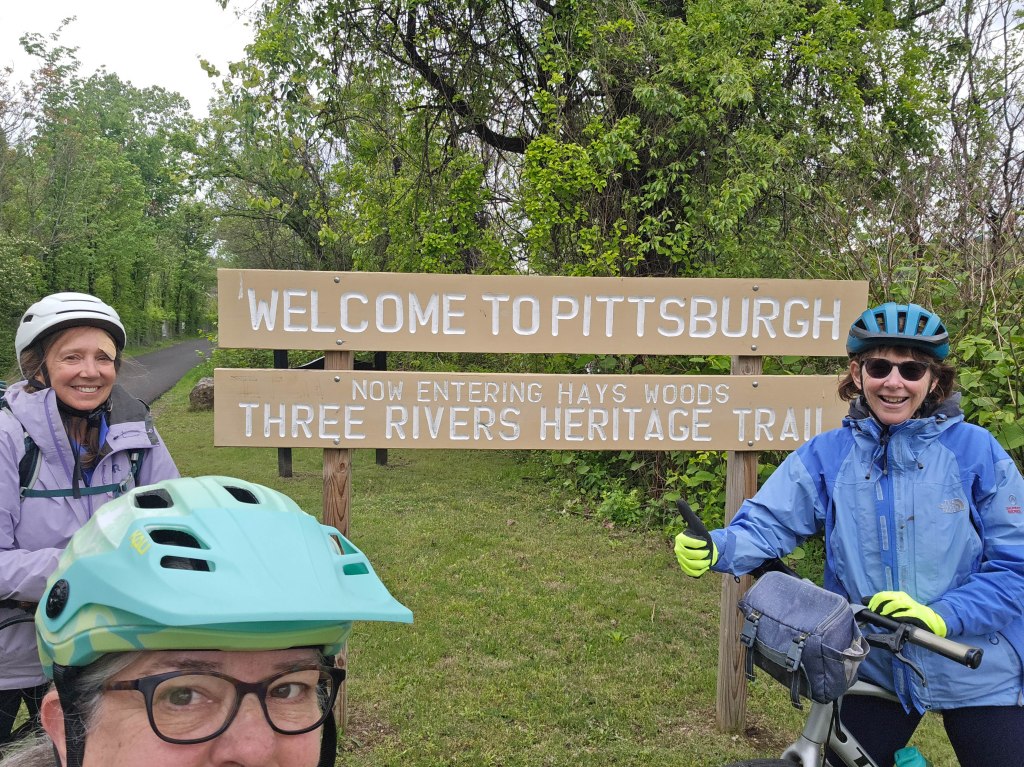
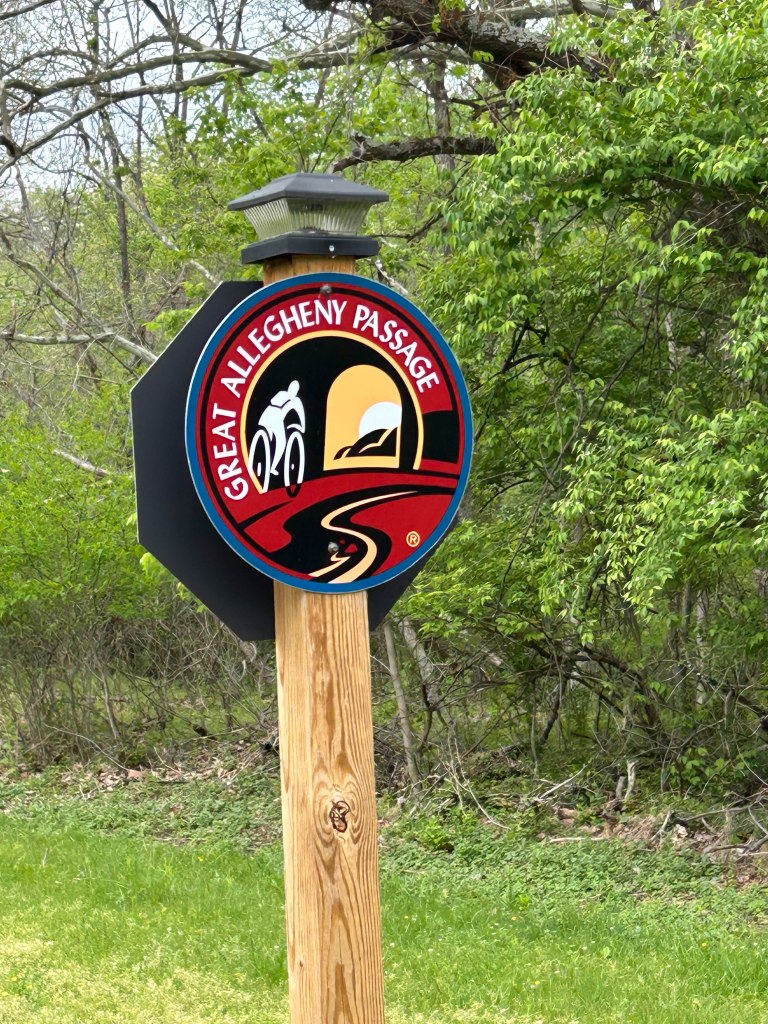
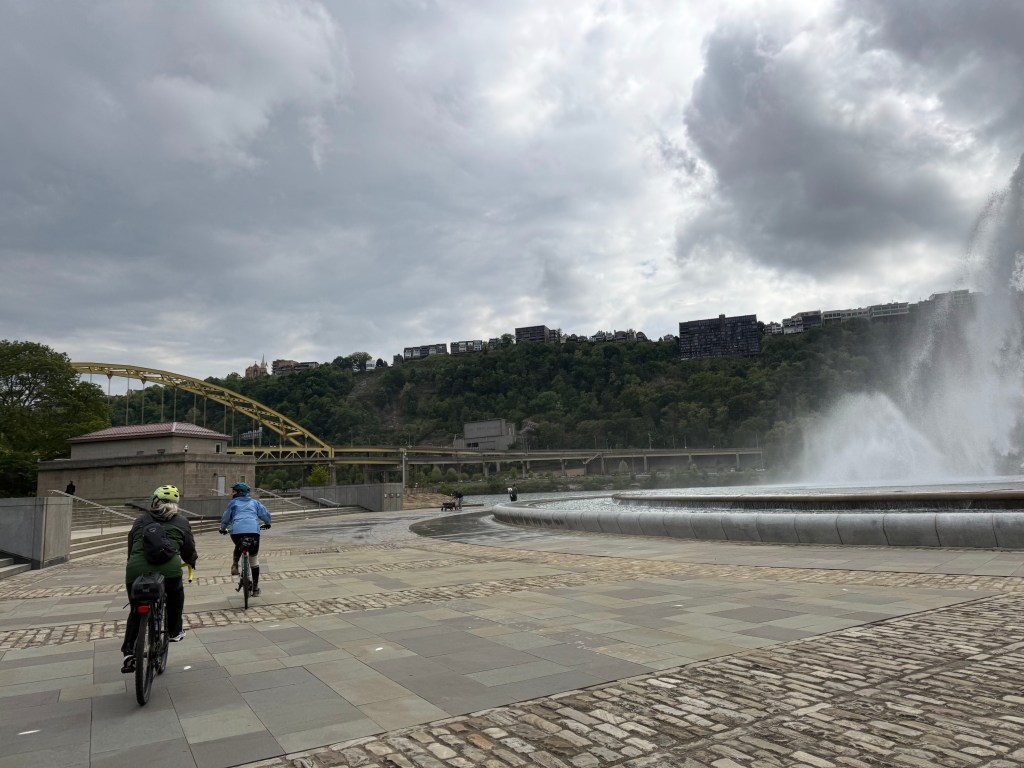
The GAP Trail ends at Point State Park, a Pennsylvania state park located on 36 acres in Downtown Pittsburgh at the confluence of the Allegheny and Monongahela rivers, forming the Ohio River. To be honest, the last couple miles were a bit of a confusion as the GAP signs that we’d been following the previous 147 miles were no longer visible (photo taken by Ruth).
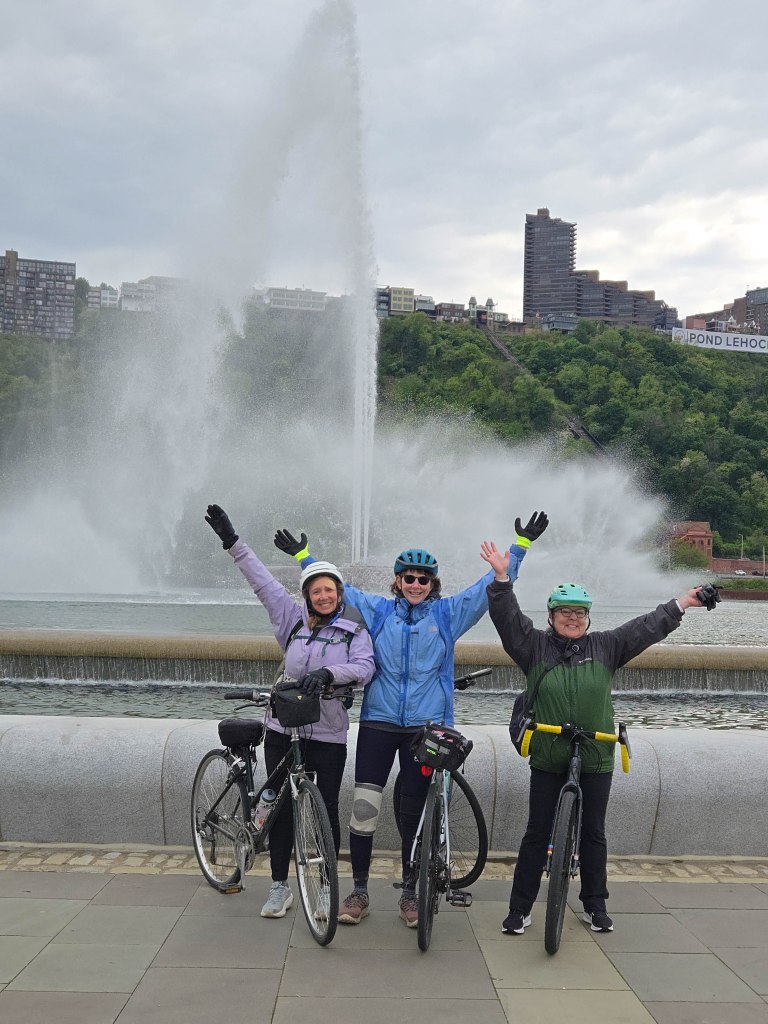
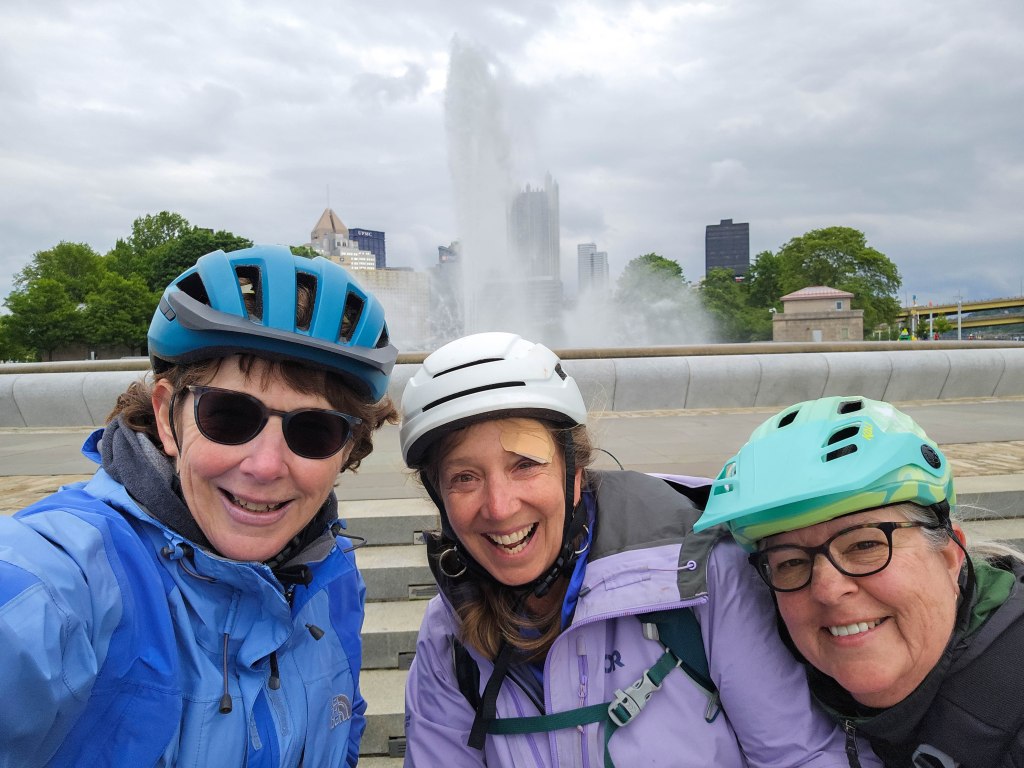
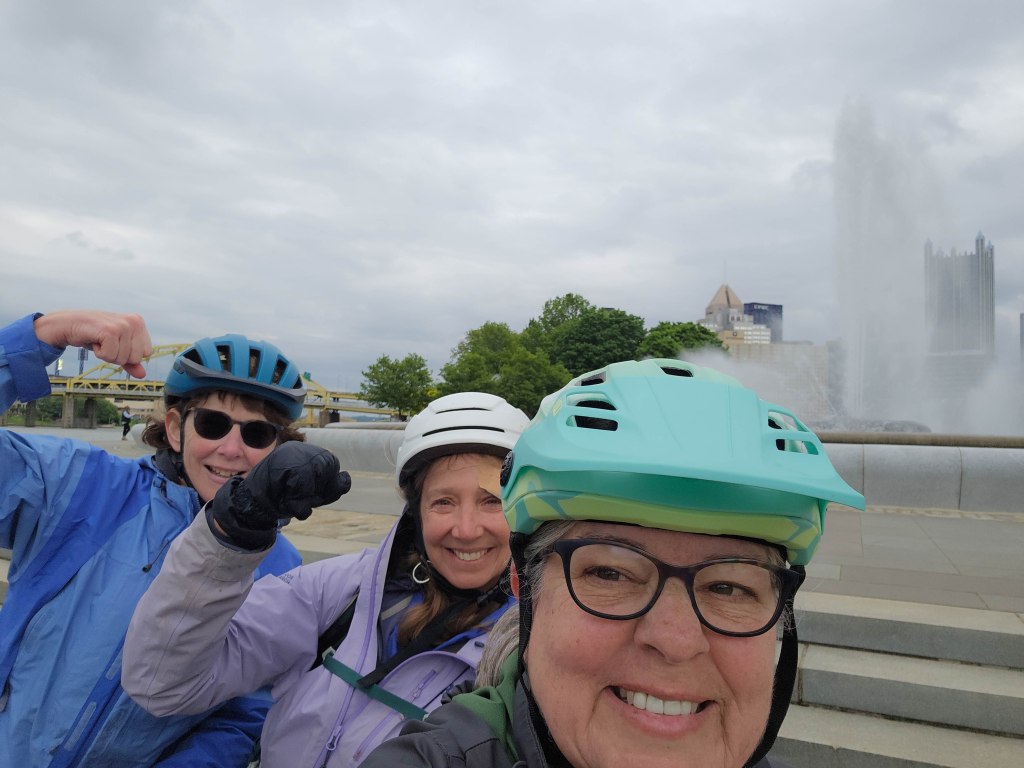
Despite that, we soon rode up to the beautiful fountain at Point State Park (photo taken by Linda).
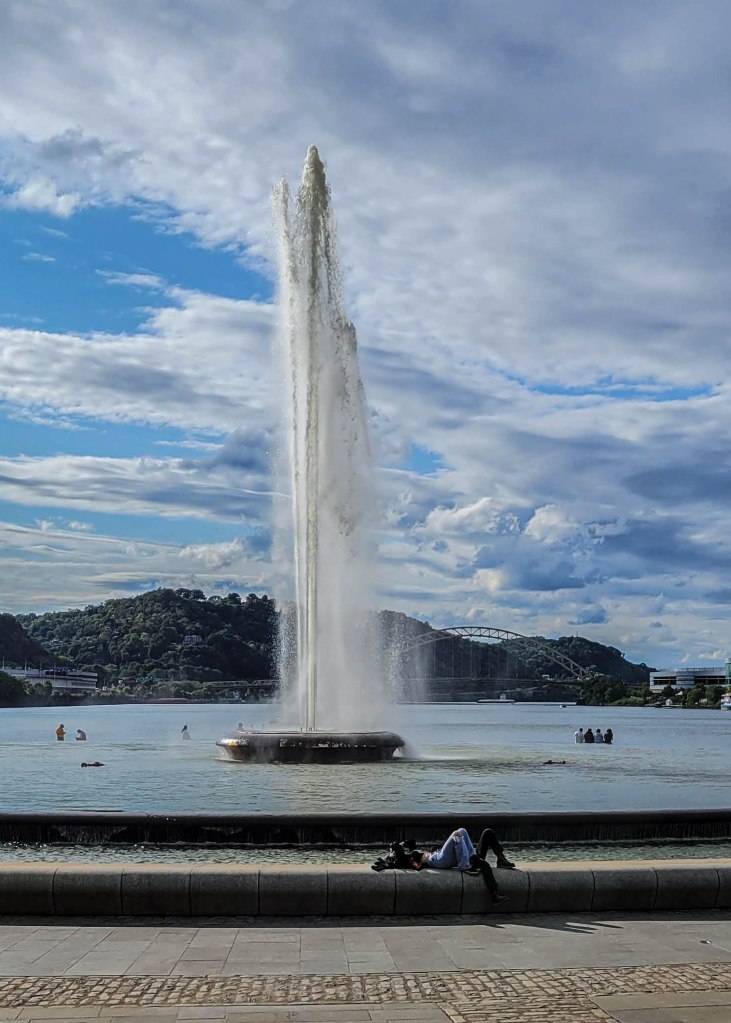
To give you a better view of the fountain, I have included a photo from a sunny day visit in 2022.
We were so excited to be there and to celebrate completing the entire GAP Trail.
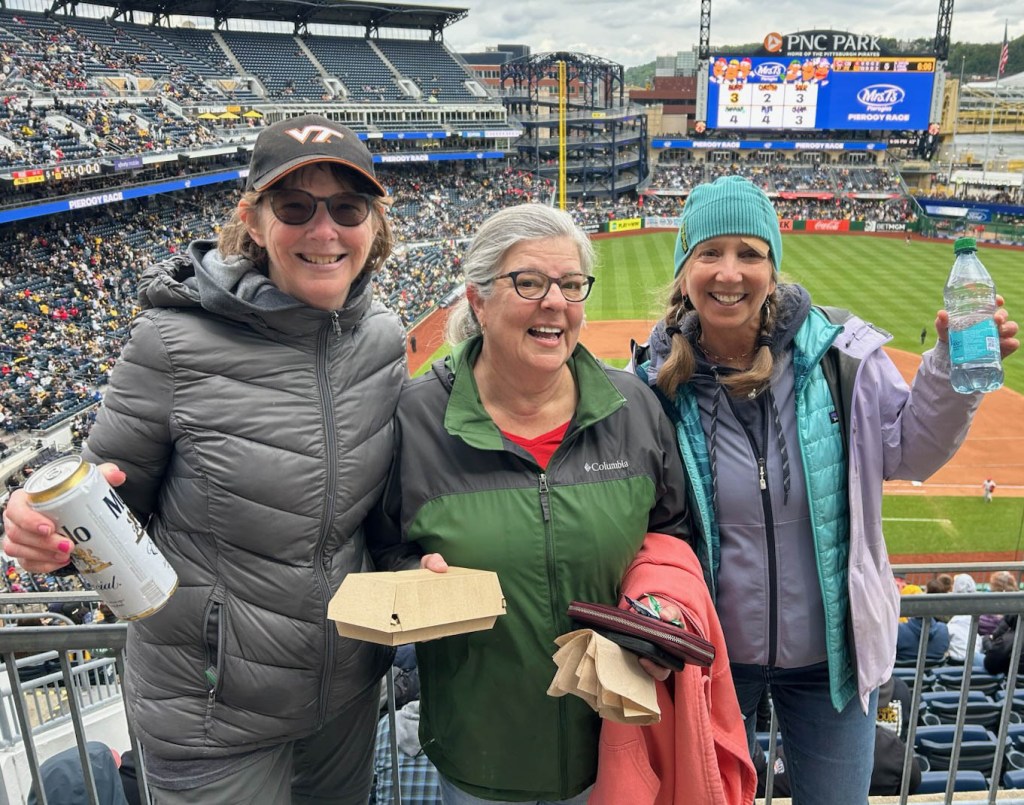
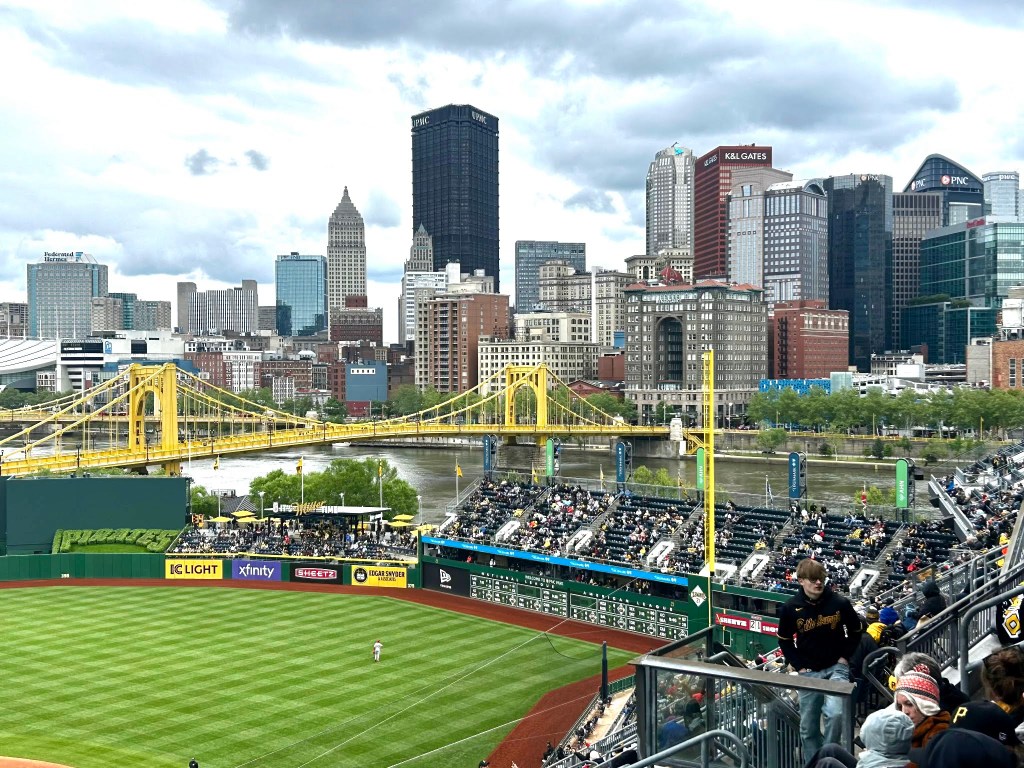
After locking up our bikes and changing out of our gear, we ended the day at PNC Park, where we met our crew and enjoyed watching the Pittsburgh Pirates play baseball.
What a great way to end our ride! And yes! We are already planning the next adventure!
The Great Allegheny Passage is a 150 mile Rail to Trail that runs between Cumberland, Maryland and Pittsburgh, Pennyslvania. Work contstraints had my friends and I doing half of the GAP in the Fall of 2025 (you can see the posts about that ride here and here) and the second half of the GAP just three weeks ago.
We arrived in Ohiopyle, PA the night before the ride, glad to be reunited with the beautiful Youghiogheny River.
Ohiopyle is a super fun “trail town” that caters to cyclists, walkers, backpackers, and river runners. We enjoyed dinner at Falls City Restaurant and Pub and slept well at the Falls Market Inn.
The next morning, after a delicious breakfast with our support crew at the Falls Market Restaurant, we set off!
It was an incredible day and we were so happy to be back on the GAP.
One of my favorite parts of riding a rail trail is learning the history of the people and communities along the way. The GAP runs through the Laurel Highlands region which is “shaped by Native American heritage, pivotal early American conflicts, and coal, coke, and steel booms”.
An unexpected pleasure is seeing public art along the way. “The Connellsville Gateway Arch, with it’s colorful stained glass fanning 16 feet into the air, welcomes eastbound travelers on the Great Allegheny Passage. Built from formed concrete, coal, and riveted steel, the arch features materials made in the town’s own Youghiogheny Opalescent Glass Factory”.
We loved the murals on three industrial silos owned by Youghhiogheny Glass. Artists Chris Galiyas and Meeghan Triggs originally painted the silos in 2008, and due to fading over the years, were restored in 2022 by Galiyas.
“To honor the steelworkers past and present, the Yellow Dog sculpture was developed through the collaborative efforts of sculptor Jim West, George Junior Republic’s Fine Arts program, and the welding program at the William H. Gladden Career and Technical Center on the campus of George Junior Republic”.
We also enjoyed the unofficial pieces of art that bring smiles.
And then we came across the Darr Mine Memorial Mosaic.
The Darr Mine disaster occurred on December 19,1907 and was the deadliest coal mining tragedy in Pennsylvania history, claiming the lives of 239 men and boys. Created by mosaic artist Rachel Sager, “the memorial includes 239 individual mosaic plaques mounted on an old stone retaining wall. Each unique mosaic is built into a vintage film canister—resembling the metal miner tags left behind in the earth”.
The explosion left 130 widows, 300 children without fathers, and 542 people without a source of income.
Rail Trails follow historic railroads, pass through small and large towns, and preserve the surrounding countryside and history. Next post will be about our fourth and final day on the GAP.