

Our weekend travels took us to Charleston South Carolina a couple weeks ago, where we of course enjoyed all the many wonderful things that are expected. I’ll be sharing more about that trip when I find a spare moment, but for now, I wanted to briefly tell you about our afternoon at the Aiken-Rhett House Museum, c 1820s.
Purchased by the Historic Charleston Foundation in 1975, the house is being “preserved as found” and represents a stark example of the wealthy vs the urban enslaved. The house and its surviving furnishings offer a compelling portrait of urban life in antebellum Charleston”.
This hallway connected the quarters of the enslaved as well as the kitchen and laundry. Walking the halls, seeing the rooms, visualizing the conditions of the enslaved was disturbing. How did slave owners not see how wrong they were?
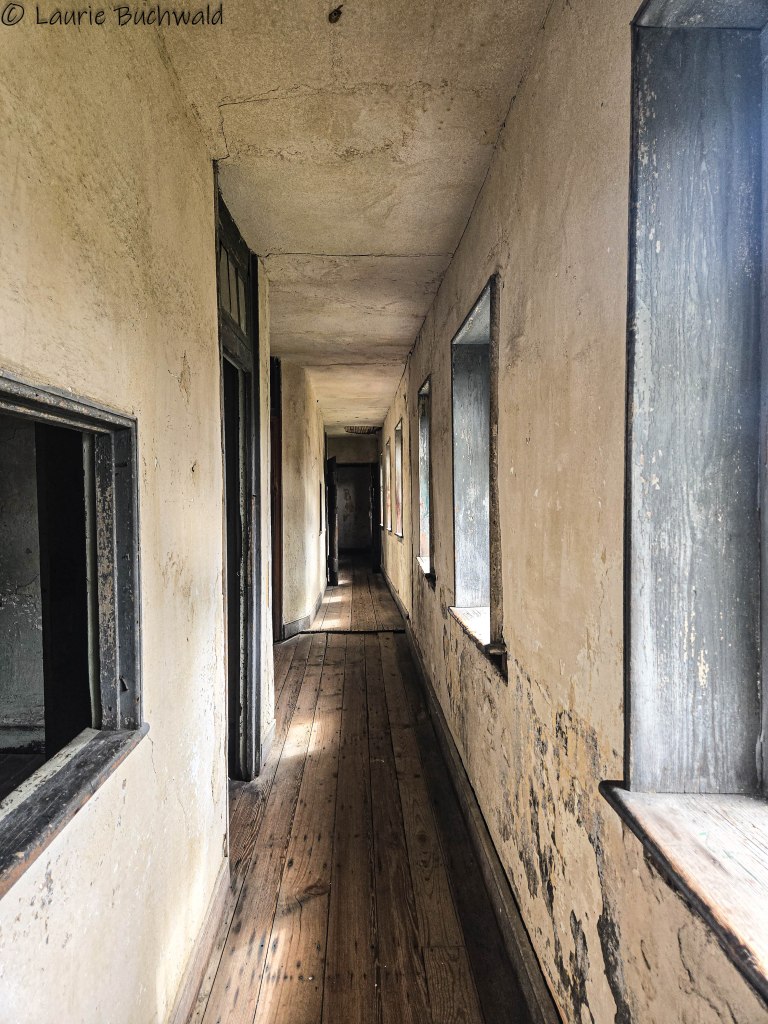
To see this image in B&W, visit my post on Monochromia here.
 Life on the Bike and other Fab Things
“How did slave owners not see how wrong they were?” Ever the question….
Sadly true
Thanks for sharing the photo. I look forward to seeing more and hope to visit the home one day.
I definitely encourage you to go. Eye Opening!
The black and white version is beautiful, but this color version is just as interesting. What a great shot!
Thank you, Charly. Your comments mean much!
Horrific and beyond comprehension.
Yes … and I hate that “modern slavery” still exits (trafficking, debt bondage, forced labor)
It’s horrific now and it was horrific then. We toured a plantation in New Orleans years ago and they didn’t sugar-coat things either. Seeing the slave quarters and hearing the stories was devastating.
Fine shot, Laurie. It’s good in color, too. I lived in the Charleston area for 15 years – a stunning southern city with an appalling history.
Well said!
Charleston is so different than SF. Are you originally from the East or West?
New Jersey 🙂
America isn’t the only country to commit atrocities on another culture. Canadian Indigenous, or first nations suffered greatly in early Canada. Especially in catholic run school. Where they took children from there families to colonize them. They were punished for speaking their own language and never saw their homes or parents again. Can you even fathom it? I ask myself the same question, “how did they not see how wrong they were?” We’re now in the process of reconciliation, which will take decades and never erase the pain and hardship. It’s truly hard to imagine.
To end on a happier note, your photo brings out a lot of feelings. That long hallway is like a metaphor of the long walk MLK lead across the Edmund Pettus Bridge. Enlightening post LB! 🩵K
I’ve been listening to stories about the firsts nations on public radio. The stories you refer to are horrific!
The metaphor with the Edmund Pettus Bridge is apt. Thank you for reading, and always for your comments, Kelly ❤
Pingback: Preservation vs Restoration: “Preserve as Found” | Life on the Bike and other Fab Things